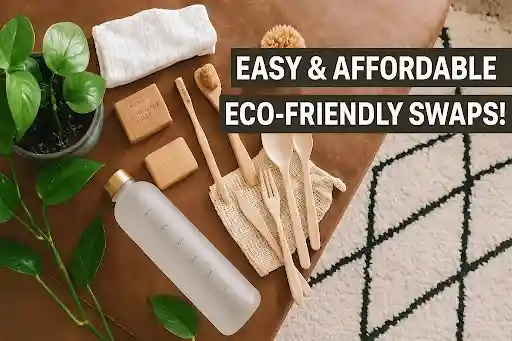
Starting my journey toward a more sustainable lifestyle for the cheap Eco-Friendly swaps , I realized that the first step doesn’t always have to be big. Many people hold the belief that eco-living is expensive, but from my own experience, it’s actually a cheaper option in the long term.
Small eco-friendly swaps like reusing or repurposing items, or even choosing to repair whenever possible, can help save money while cutting down on waste. I’ve learned to refuse buying things I don’t really need, and instead look for products I can use again. It may seem like a short step, but it builds momentum toward a more conscious lifestyle.
I personally love sharing the practical choices that worked for me because I know the struggle of staying on a budget while making eco-friendly changes. For example, looking for free or low-price alternatives, like swapping out everyday items with sustainable ones, is an easy start. Even small decisions, like what to buy, can lead to big differences in the long term.
This site may include posts, affiliate links, and sometimes earn a small commission, but it helps keep the platform running while offering products that align with what I truly support. These eco-friendly swaps are more than just lifestyle changes they are choices that balance cost, care, and sustainability.
Here are some Zero Waste Eco-Friendly Swaps That Will Save You Money
Replace Paper Towels With Rags
When I first thought about quitting the paper towel, I worried it might be inconvenient. But soon I realized how many old t-shirts and worn leggings were sitting unused in my closet. Turning them into cleaning clothes gave me cheap options without buying new supplies.
Even tea-towels from an op-shop worked perfectly for dusting or soaking up spills, and a simple mop handled the rest. These eco-friendly swaps didn’t just reduce waste they helped me save $100 a year, which felt like money I had created out of nothing.
Another surprise was how versatile these rags became. A cut-up pair of leggings doubled as makeshift hair ties or even soft headbands when needed. This eco-friendly swaps little shift reminded me that sustainability isn’t about spending more it’s about being creative with what’s already at hand. By rethinking simple habits, we get long-lasting, eco-friendly solutions for the better eco-friendly swaps that don’t compromise comfort or convenience.
compostable dish scrubs
One of the easiest eco-friendly swaps I made in my own kitchen was replacing synthetic sponges with compostable options. I remember writing a blog post about my first set of scrubbies, and how surprisingly durable they were.
Unlike plastic ones, these natural tools break down after use and align perfectly with Zero Waste habits. For greasy pans, I reach for a wooden pot scraper, while delicate surfaces get the gentle care of loofahs or even a simple rag. Each choice feels small but adds up to meaningful change in daily Dish Washing.
Over time, I learned to master a mix of cleaning tools that serve different needs. A copper scrubbers set works wonders on tough stains, while a bottlebrush keeps my jars and cups spotless. Even a loofah or sturdy scrub can replace countless throwaway items. Shifting to compostable and reusable cleaning pieces not only saves money but also keeps my kitchen routine sustainable and simple.
Repair Not Replace
I learned early on that when something breaks, the first thought doesn’t have to be replacing it. You can save money and reduce waste if you choose to repair things yourself. I always keep a needle and thread handy for quick clothing repairs, and sometimes even manage to refashion old shoes into something fresh.
These small repairs are great ways to give items a second life, and there are countless options out there for anyone willing to try. There are even community cafes that host forking free repairs, where you can get help with basic fixes or learn new skills.
I once joined one and discovered how simple it is to do 4 clothing repairs with guidance. Whether it’s stitching up worn fabric, patching footwear, or finding creative methods to repair everyday objects, the experience is rewarding. The best part? These choices are not only eco-friendly swaps but also deeply empowering.
Shop Secondhand
When I first explored second hand shopping, I was surprised at how much fun it could be. From clothing to furniture and even small household items, there’s always a new spot to uncover with plenty of hidden bargains.
Places like op-shops, vintage shops, or even online spaces such as e bay, gumtree, and Facebook marketplace offer endless choices. I’ve even enjoyed browsing garage sales, where every visit feels like a little treasure hunt. Beyond the variety, I noticed how little or no packaging is involved, making the whole experience even more eco-friendly swaps.
What makes this eco-friendly swaps lifestyle change powerful is that it helps prevent landfill waste while letting you save a buck. By supporting second hand sellers make the best eco-friendly swaps, you’re also standing over production, which often harms the environment.
Personally, I’ve found that buying used items doesn’t feel like settling for less like the eco-friendly swaps feels like being part of something bigger. Every purchase is a conscious step toward reducing waste and encouraging thoughtful consumption.
Switch to Soap Bars
I used to think liquid soap was the easiest choice, but over the years I realized how much it actually creates extra waste. Constantly buying bottles and refills every fortnight was not only costing me close to $150, it also had a huge impact on my overflowing recycle bin.
It felt like such a small habit, yet it added up to a fortune in both money and plastic. Switching to a Bar was by far the best option I found. Whether from a supermarket, local markets, or even specialty shops, there are so many choices with less plastic packaging sometimes even pictured at a zero waste store.
I even started making my own with castile and DIY methods, which work at just a fraction cost. A simple Foaming version also works great if you still love that bubbly feel. This one change made me realize how small eco-friendly swaps can truly make a difference.
Refuse Plastic Bags at the Supermarket
I still remember when I first noticed how paying those extra 15 cents for plastic disposable bags really adds up. It felt unnecessary, especially when simply bringing my own cloth bags could help me save around 50 to 80 bags a year.
Over time, I realized that small eco-friendly swaps like this make a real difference for both my wallet and the environment. Now, I keep a few sturdy bags in my car. They’re easy to reuse, and when small tears appear, I just repair them instead of throwing them away.
Some are made from naturally biodegradable cloth, which makes them an even more easy eco-friendly swaps. This habit of eco-friendly swaps has become second nature, and I’ve found it’s one of the simplest ways to live greener without much effort.
Use Natural Air Fresheners
I once relied on plug in air fresheners and sprays, but here’s the bad news they may harm your home and health. Many of these fragrances are created from petroleum products, and the glossy packaging adds unnecessary plastic.
That’s why I decided to skip them completely and opt for none of those chemical scents. Instead, I simply open windows, let in sunshine, and take 5 minutes to enjoy fresh air flowing through my space. It’s a simple swap that feels healthier and saves me from waste.
When I want a cozy touch, I make a natural reed diffuser, a DIY room spray, or even real pot pourri. Making these is surprisingly easy I use lavender, rose petals, eucalyptus leaves, or seed pods.
They smell amazing, look beautiful, and bring a botanical vibe into my rooms. I even craft little drawer sachets, which not only last more but also feel like my own creation. With these eco-friendly swaps, your space feels fresher, greener, and uniquely yours.
Don’t Store Stuff
I used to believe that storing extra stuff in boxes or paying for storage units was protecting my items for the long term. But in reality, it was costing me more money than I ever thought. These so-called cool storage options from sheds to additional furniture with shelving only made me obsessed with keeping things that didn’t really require to last forever.
I realized that having loads of unused belongings wasn’t adding value to my home, it was just invading space. Instead of being stuck in the endless process, I started to sell, donate, or re-purpose what I didn’t need, making my rooms lighter and my life simpler.
Following the advice from Lindsay of “Treading My Own Path”, I picked up her book and learned how declutter habits align with a zero waste style. The Less Stuff mindset helped me see that not every item needs to be saved forever especially when someone else could find eco-friendly swaps that become more useful.
What once felt like paid storage security turned into freedom as I let go of excess. Now, my homes feel more open, and I no longer feel weighed down by the pressure of keeping everything.
Switch OFF and Save
Everyone remembers that annoying nagging voice of their parents telling us to turn off the light, fan, or even the radio during our childhood and teenage years. Back then, I never understood why keeping things plugged when not using them mattered so much.
Now, with so many modern household items draining energy even when not in use, I realize how right they were. Most devices today keep pulling power unless completely switched off at the power point, and this simple act of eco-friendly swaps is one of the easiest ways to cut waste.
Recently, I tried doing a small energy audit at my home using a free kit from the local library, and it was eye-opening. I managed to find plenty of areas to improve with super quick fixes like turning devices off, choosing efficient light globes, and upgrading old appliances. These little steps don’t just save money; they make your space more mindful and sustainable.
Don’t Be a Fashion Victim
I once fell into the trap of fast fashion, grabbing clothes that looked trendy but came with huge environmental consequences. This cycle creates waste every minute of the day, silently hurting our planet and wallet.
I realized that before I buy, I must think well about each item whether it can stay with me for 2, 5, or even 10 years. When I choose more love for pieces that last long, I find I only get what I really need. That shift taught me to opt for natural fiber which are not only cheaper, longer, and comfortable but also kinder to my head and clothes in the long run.
Over time, I’ve learned that a eco-friendly swap can be fun, like hosting a party or visiting an op shop for an exchange of clothing with friends. These habits help me avoid trends that are only popular for a season and instead lean toward classic styles that stay versatile across occasions. By making smarter choices, I’ve discovered sustainable fashion doesn’t limit me it simply gives me better options that feel more personal and lasting.
Thermos over disposable cups
Every time I visit a coffee shop, I notice how many disposable cups are produced each year over 500 billion, and only a small fraction gets recycled. Most are made with plastic linings that don’t break down easily.
I once carried my own mug to a café, and not only did my drink taste better, but I also felt good knowing I wasn’t adding to the waste pile. Choosing a thermos or even a mason jar is a small but powerful change.
At home, I love to brew both hot drinks and cold drinks, and my insulated cup helps them stay fresh for hours. Sometimes I switch to a water bottle or even a reusable cup when I’m on the go.
These simple eco-friendly swaps keep me aligned with a zero waste coffee lifestyle. Writing this blog post on cheap eco-friendly swaps made me reflect on how small choices matter, and I hope more people can learn to see that using a thermos or jar instead of throwaway cups is one of the easiest, most rewarding eco-habits.
Make your own Makeup Remover
I used to spend around $20 on a small bottle of store-bought makeup remover, and it hardly lasted more than a month. When I realized I could make my own at home, it turned out to be not only better for my skin but also far cheaper in the long run.
With a simple DIY recipe, I started mixing just 2 ingredient essentials—like coconut oil and water. By using it sparingly, one batch lasts about 4-6 months, which means I’m now saving nearly $40-$100 a year depending on how often I use it.
What excites me most is that this eco-friendly swap is a true low waste option. Unlike the constant plastic packaging that comes with store-bought removers, my homemade version avoids unnecessary waste. It feels good knowing I’ve cut back on clutter, embraced a sustainable habit, and found something more personal and effective for daily care.